
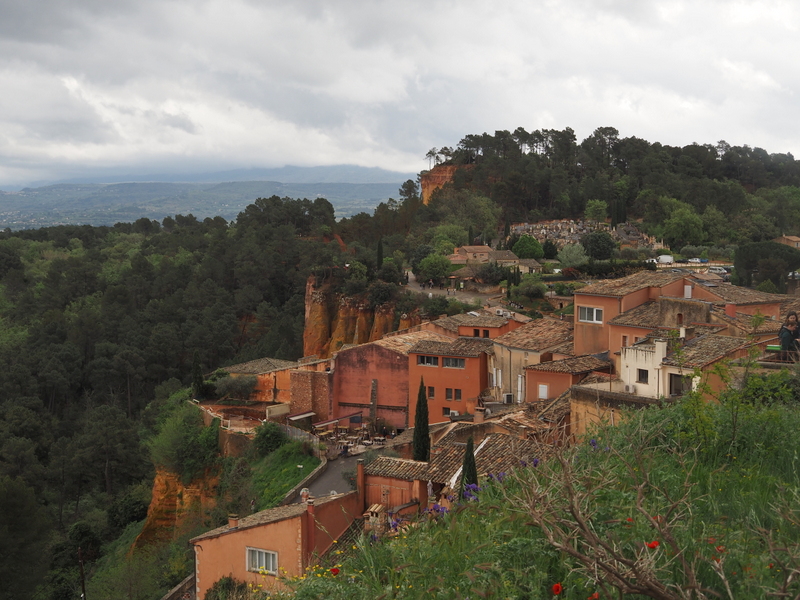
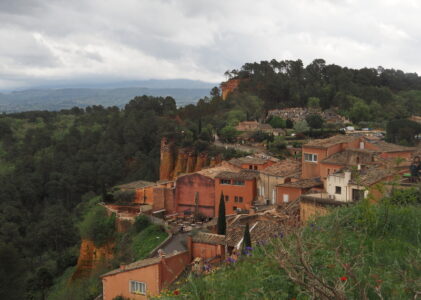
It all begins on the rocky promontory of Gordes. Before lacing up your shoes, imagine the fate of the Vordenses, that Celto-Ligurian people who, long before the Romans, had chosen this rock for its safety.
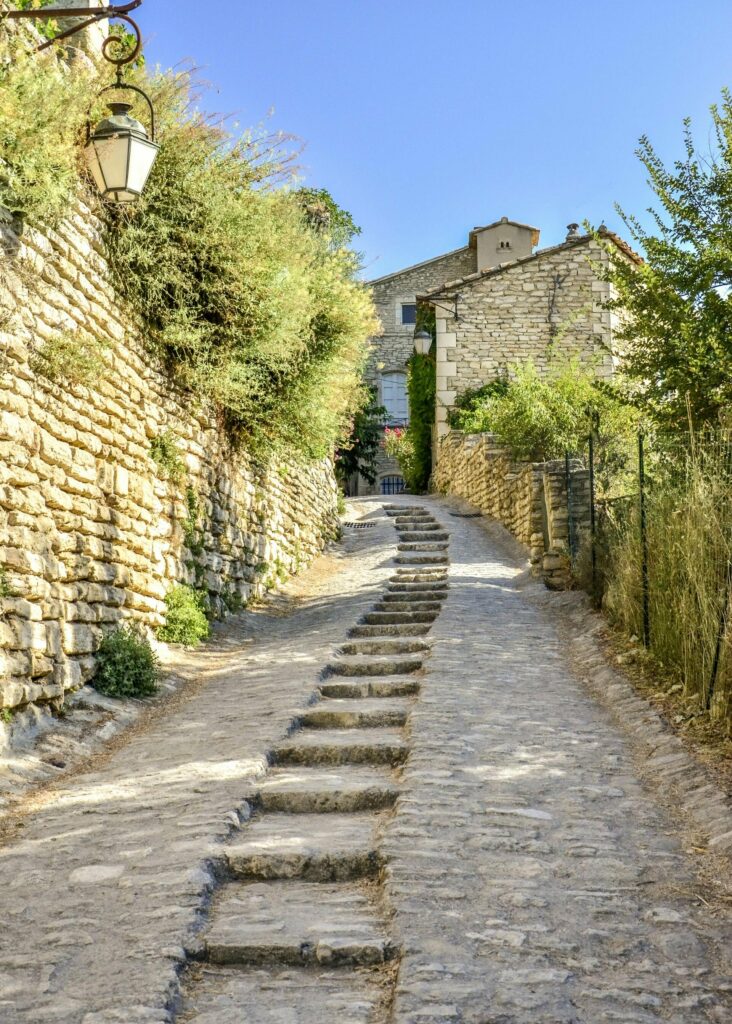
Leaving the village via the south-east, you’ll walk along calades (narrow streets paved with stones laid on their sides). Here, history is etched into the white limestone. You’ll come across bories, those mysterious dry-stone huts built without mortar, the silent sentinels of shepherds of yesteryear.
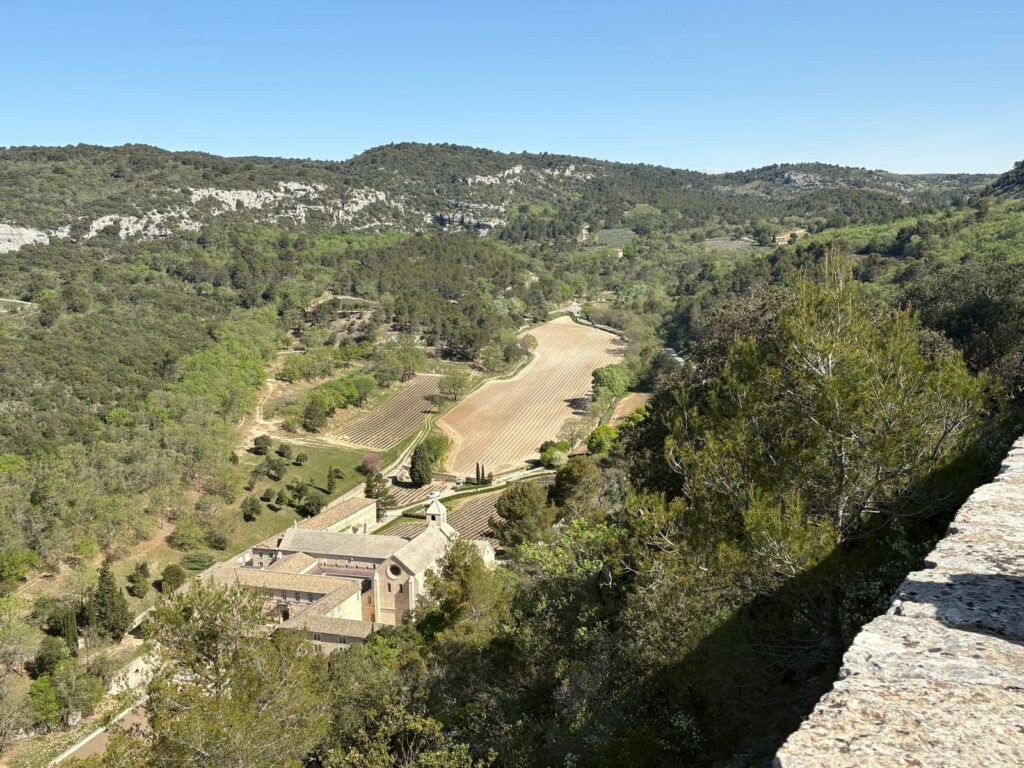
The Secret Stop: Joucas, the Templars’ Refuge
After a few kilometres through the rosemary-scented scrubland, the path descends gently towards Joucas. It is a village of tranquillity and humility, far from the hustle and bustle.
History: Joucas was once a commandery of the Knights Hospitaller of St John of Jerusalem. Whispers of the history of the Waldensians can still be heard here – these peasants who came from the Alps in the 15th century to repopulate the region, before being tragically persecuted for their faith.
Poetry: Don’t miss the “Labyrinth of Art” as you pass through the village: monumental sculptures that seem to converse with the ancient stones.
The Promised Land: Roussillon and the Legend of Sermonde
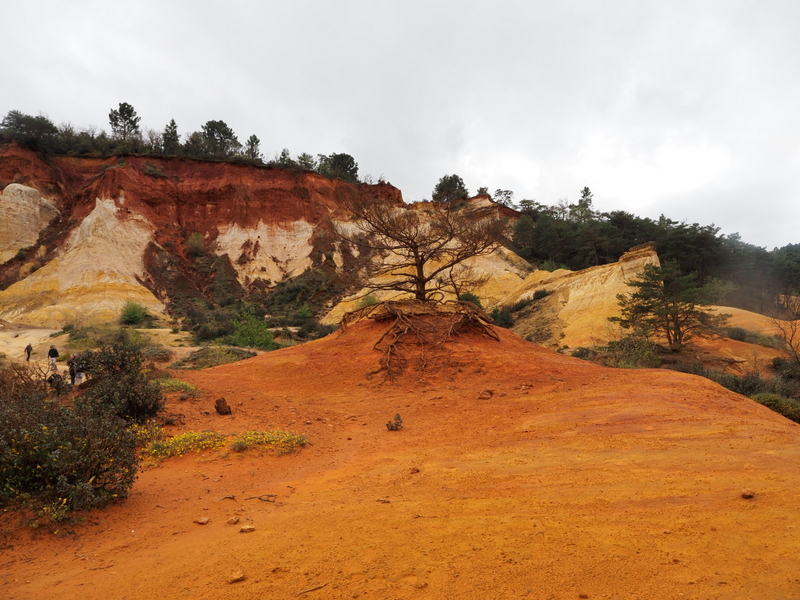
As you leave Joucas, the landscape changes. The white limestone gives way to a subtle ochre, which gradually becomes more vivid. You are entering the land of the ochre miners.
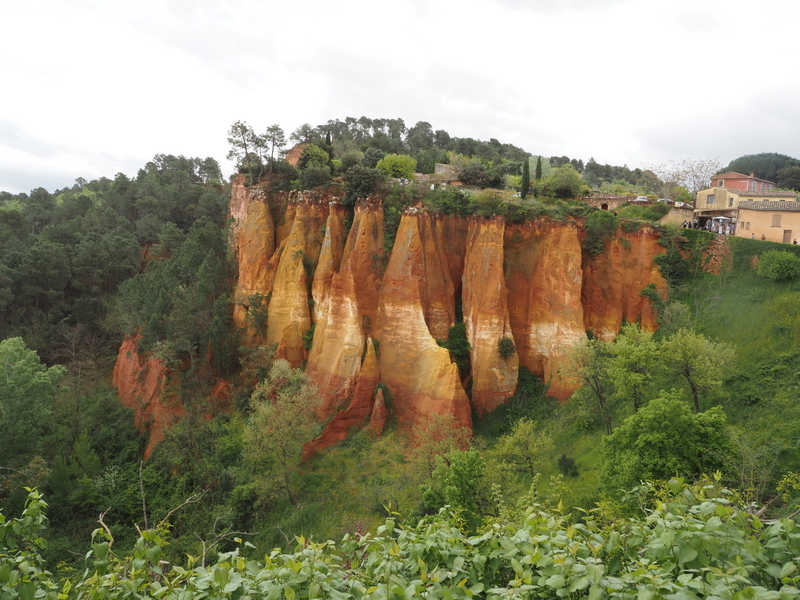
Arriving in Roussillon is a visual shock. The village seems to sit atop a wave of frozen flames. But where does this blood-red colour come from? Legend has it that the beautiful Lady Sermonde, distraught after her jealous husband had killed her lover (the troubadour Guillaume de Cabestan) and made her eat his heart, threw herself from the top of the cliffs. Her blood is said to have stained the earth forever.
Itinary
Distance: Approximately 13 km (allow 4 hours for a leisurely walk).
The best time: Set off early in the morning from Gordes so you arrive in Roussillon when the sun is at its highest or beginning to set, to see the ochre cliffs glow.
🎒 In your rucksack:
Water (refreshment stop in Joucas).
A sketchbook or a camera: the contrast between the blue Provençal sky and the red cliffs is a natural work of art.
A word of advice: Don’t wear your favourite white walking shoes… the ochre dust is unforgiving!